
How to Search for a Baltimore County Warrant
Maryland publishes no single database of every active warrant. A Baltimore County warrant check means pulling a case record through the Maryland Judiciary Case Search portal, then verifying what you find with the court that issued it. The portal holds selected case data, not the whole file. Begin with whatever the person already has: a case or citation number, the name on the court papers, and the court that handled the matter. Those three details do most of the work.
- Open the Case Search portal and accept the terms.
- Search the case or citation number when one is available. That pins the exact case instead of a list of similar names.
- Search the name when there is no number, using one letter plus a percent sign for a partial last name.
- Filter by court, case type, or date of birth, and compare each result against the person's own papers.
- Check the county child-support warrant list separately for a support matter.
- Call the issuing court or the Sheriff before treating any entry as an open warrant.
Why a Baltimore County Name Match Can Be Wrong
Common surnames bring back crowds. Case Search matches a name exactly as it was indexed, so two Baltimore County residents who share a name can produce cases that look identical. Check the court, the filing date, and the caption before trusting any match.
Baltimore County Warrant Search Fields
One form drives the entire Baltimore County lookup. The case number or the name alone identifies a case. Every other field just narrows the list.
| Field Label | Type | Notes |
|---|---|---|
| Case Number | Text | Returns the single case when the citation or case number is in hand. |
| Name | Text | Exact match by default. Partial last names use one letter plus a percent sign. |
| Date of Birth | Date | Separates people who share a name. |
| Party Type | Dropdown | Confirms how the person appears in the case. |
| Court | Dropdown | Circuit Court or District Court, which decides the next office to call. |
| Case Type | Dropdown | Traffic is the setting the state traffic page documents for citations. |
| Filing Date | Date range | Useful for older notices. Not a warrant issue date. |
What Sits Behind a Baltimore County Warrant Check
Five layers answer five different questions in Baltimore County. The Maryland Judiciary access page says plainly that Case Search is not a complete record.
- Case Search
- Statewide selected case data. Good for a case number, a court, and docket events.
- Clerk's file
- The filed court record held at the courthouse where the case was heard.
- Sheriff warrant inventory
- The internal service and return record. Not open to public search.
- Child-support warrant list
- One narrow public list covering support warrants only, published by the county.
- Records request
- Existing county agency records released under the Maryland Public Information Act.
What a Baltimore County Warrant Search Returns
A hit is a case, not a warrant certificate. The result lists parties and docket events, with the warrant usually buried among them. In a Baltimore County search, the case number matters more than any status line.
| Case Number | The court's identifier, shown in the format the court uses, for example C-03-CR-24-000000. |
|---|---|
| Court | Which court holds the file, and therefore which clerk can answer questions about it. |
| Case Type and Status | The kind of case and its current standing. A status is not a warrant check. |
| Filing Date | When the case started. A warrant can issue much later. |
| Docket Events | The event list that may include an issuance, a recall, or a hearing after a warrant. |
When Nothing Shows in a Baltimore County Warrant Search
A blank screen is the most misread result on any court portal. Sealed, shielded, and expunged records stay hidden. Juvenile matters are confidential. Restricted warrant documents fall into limited categories on the state access page, and a warrant issued hours ago may not be indexed yet. The withholding rule for police and investigative records sits at General Provisions § 4-351.
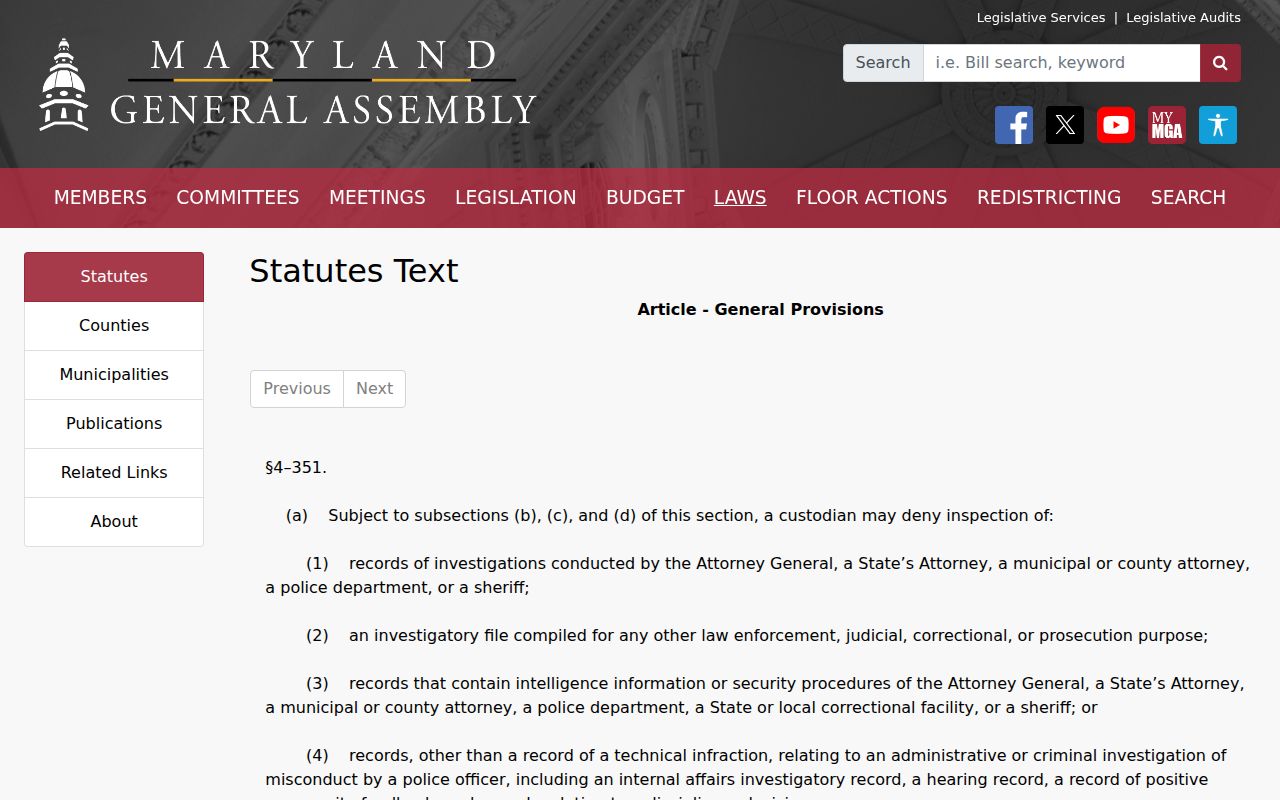
That exemption explains why a Baltimore County case can show an event while the document behind it stays out of reach. Note: Treat a miss as a reason to call the issuing court, never as proof that no warrant exists.
Where Baltimore County Warrants Are Checked
Each court keeps its own process. The Circuit Court clerk at 401 Bosley Avenue holds felony, family, and juvenile matters. The three District Court locations handle traffic, misdemeanor, citation, and ordinance cases. A child-support body attachment lives in a family case at the Circuit Court, and the county posts a limited list of those. Law enforcement adds a fourth layer. The Sheriff's Warrant Squad and the county police each keep service records, and neither is a public search. A complete Baltimore County warrant check touches the court record and the county list first.
The Baltimore County Child Support Warrant List
Baltimore County publishes exactly one warrant-facing search tool, and it covers active child-support warrants only. The Active Child Support Warrant Search offers filters of All, Last Name, or Zip Code, a search box capped at 20 characters, and a Go button. Results come 20 to a page. The table shows a picture column, the name, a date of birth, an issue date, and a bail amount. A row is not a public case file. It never replaces the court record.
Scope warning: This list covers support warrants in Baltimore County and nothing else. A name missing from it says nothing about criminal, traffic, or bench warrants.
Federal Warrants Sit Outside This Search
Federal cases never appear in Case Search, so no local search can clear one. The U.S. District Court for the District of Maryland keeps its docket at the Baltimore courthouse on West Lombard Street, with records behind PACER at 10 cents a page and a $3 cap per document. The U.S. Marshals Service runs the fugitive side from the same building. It publishes a regional tip line for profiled cases, though that line takes tips rather than status questions. A Baltimore County resident checking on a personal matter should call the federal clerk or a lawyer instead. That keeps the federal warrant question separate from the county one, where it belongs.
Access and Restricted Warrants
Maryland presumes judicial records are open, but the Rules carve out categories. Warrant applications and affidavits, pre-execution search-warrant material, certain arrest-warrant records, juvenile files, and sealed or shielded records all stay outside ordinary public view. The rest waits at the clerk's office where the Baltimore County case was filed.
Key Rules:
Maryland Rule 16-902 sets the access framework: judicial records are presumed open unless a rule, statute, or court order restricts them.
Courts and Judicial Proceedings § 3-827 keeps juvenile court records confidential except for the access the law or a court allows.
General Provisions § 4-351 allows an agency to withhold police and investigative records in defined circumstances.
The state publishes its records-request timing rule at General Provisions § 4-203.
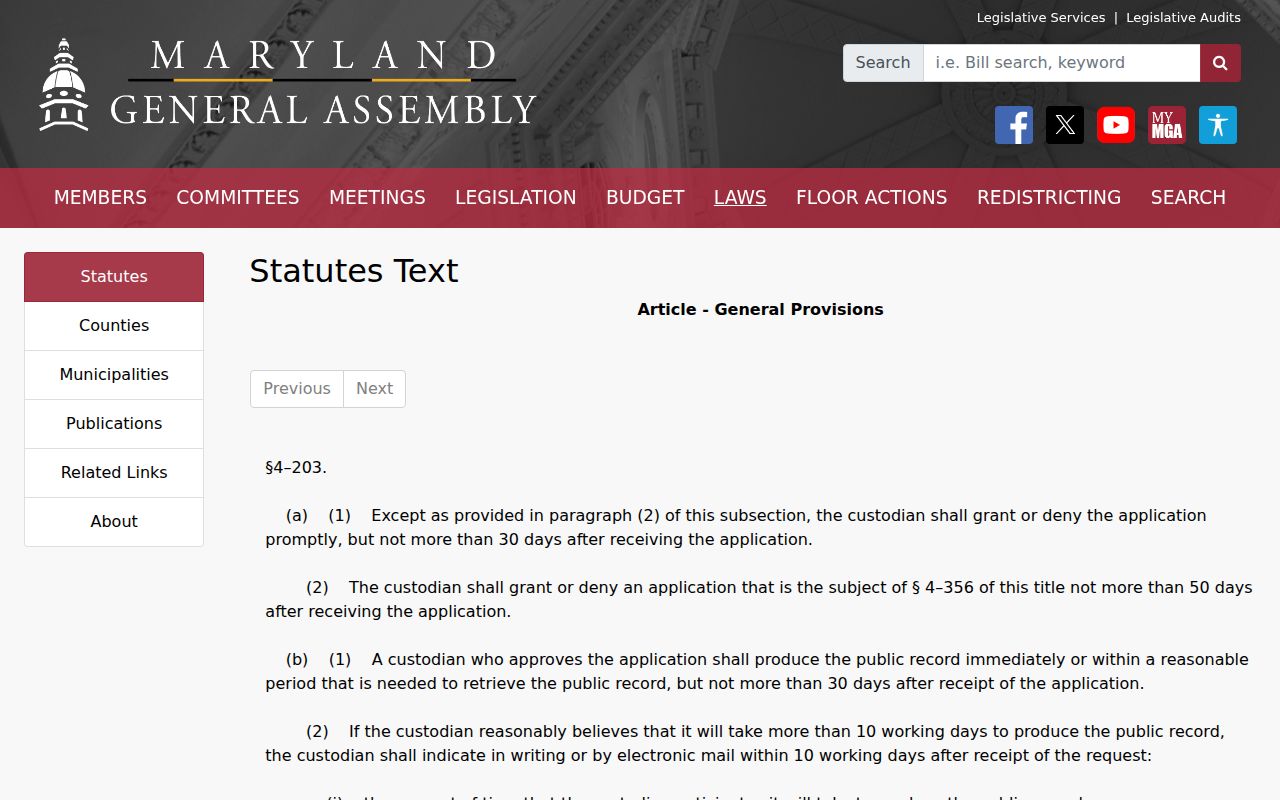
Copy fees follow court rules, not a flat price. Requests under two hours of staff time generally cost nothing. For the county-wide picture, the records home page lists Baltimore County courts, the Sheriff, and the request routes.