
Bench Warrants in Baltimore County
A bench warrant is a judge's order to bring someone before the court. Maryland issues one after a missed court date, a failure to surrender after release on bail or recognizance, or a broken court-ordered condition. The mechanics are procedural, nothing more. Circuit Court, District Court, and child-support cases in Baltimore County all produce these warrants. Whichever court set the case controls the warrant, and its Clerk's Office keeps the file, so that is where a warrant lookup begins.
Baltimore County Bench Warrants: Two Rules
Two statutes govern most bench warrant situations, and mixing them up can send you to the wrong office. Criminal Procedure § 5-211 covers release conditions. It applies when a person out on bail or recognizance willfully fails to surrender, and a bench warrant then issues with bond the judge may set. Post that bond and a judicial officer can mark the warrant satisfied and reschedule the case. Criminal Procedure § 5-212 works differently. That rule governs a failure to appear in response to a citation, with specific exceptions written into the statute, and the missed appearance carries its own penalty apart from the underlying charge. For a Baltimore County bench warrant, the distinction decides whether your case sits with the Circuit Court or a District Court location. The state publishes the full text of Criminal Procedure § 5-211 on the General Assembly site.
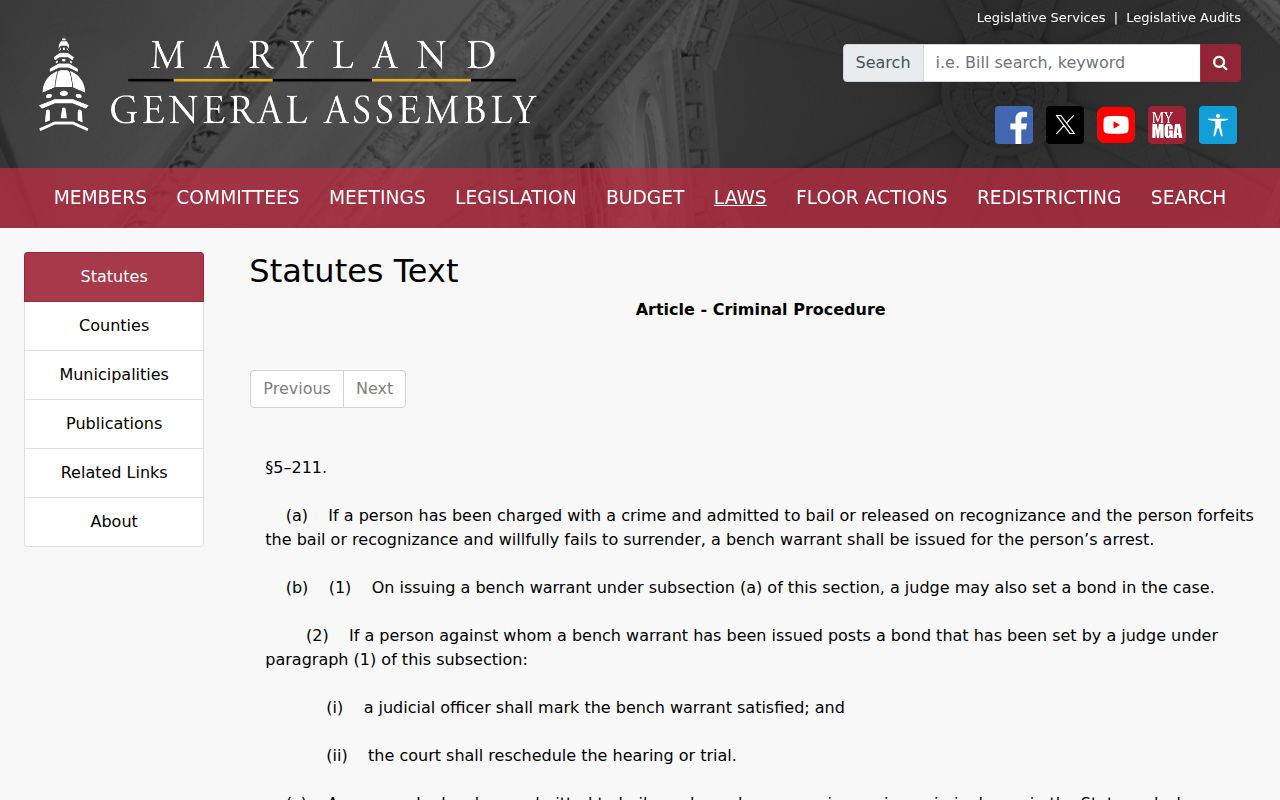
The statutory language is short. Read it directly. It separates a release-condition failure from a citation failure, and in Baltimore County that distinction decides which courthouse holds your case.
How a Bench Warrant Is Issued
The clerk records the missed appearance in the case file first. A judge then reviews that record, confirms the failure, and signs an order directing law enforcement to take the person into custody. The warrant goes into the court file and the agency systems, and the Sheriff receives it for service in Baltimore County. None of this requires the person to be present. Notice of a missed date can arrive long after the warrant already exists. That gap is exactly why a warrant check is worth running the moment a court date slips.
What Follows a Baltimore County Bench Warrant Arrest
Circuit criminal cases follow a published case-management plan. After a warrant arrest in Baltimore County, the person goes before a District Court judicial officer within 24 hours, or before a Circuit judge at the next session when the warrant directs it. A daily 9 a.m. video review docket handles bench-warrant and bail-review matters connected to the detention center. A Circuit bench-warrant hearing generally follows within 48 hours. Those are plan timelines only, since the warrant's own language and the court's schedule control. A public defender may be available at the jail for someone who qualifies and asks.
Bench Warrant vs Arrest Warrant
Both orders authorize custody, which is why Baltimore County residents confuse them. They differ in where each comes from and in what it says about the underlying case.
| Point | Bench Warrant | Arrest Warrant |
|---|---|---|
| Who issues it | The judge handling an existing case | A judge or a District Court commissioner |
| What triggers it | A missed appearance or a release-condition failure | Probable cause on a statement of charges or application |
| What it means | The case stopped moving because a required step did not happen | The state alleges a new offense |
| Records route | Clerk's file in the court that set the case | Charging documents, some of which stay restricted |
Baltimore County Bench Warrants From Support Cases
Support enforcement produces its own version of the process. A missed support hearing in Baltimore County can bring a bench warrant or a body attachment, and the state child support office notes this happens even when payments are current. The warrant itself generally states a purge or bond amount. The county publishes a limited list of active support warrants, and the Sheriff accepts surrender around the clock for them. Be careful with payment, though. A payment through an account channel does not necessarily recall the warrant, so the court has to confirm what satisfied it.
How to Resolve a Baltimore County Bench Warrant
Resolution starts with the case number and the court. Call the Clerk's Office for the court that issued the Baltimore County warrant. Ask whether it is still active, whether a hearing or bail review can be set, and whether counsel may appear in place of the person.
Caution: A new date or a payment does not update every system at once. Get court confirmation that the warrant was recalled before treating the matter as closed.
Common outcomes are a new court date, a bond, a purge payment in a support case, or a motion to recall. The Baltimore County court decides each one. Nothing here is self-service, and none of it can be done through a third-party website.
Where a Baltimore County Bench Warrant File Lives
Three offices hold three pieces of the same matter. The Clerk's Office keeps the filed case record and any later order that recalled or satisfied the warrant. The Sheriff keeps the service record. The issuing court controls the warrant's status, so a file request goes to the clerk at the courthouse where the case was heard in Baltimore County. Read the clerk's own description: Clerk of the Circuit Court for Baltimore County, which handles felony, family, and juvenile filings in the county.
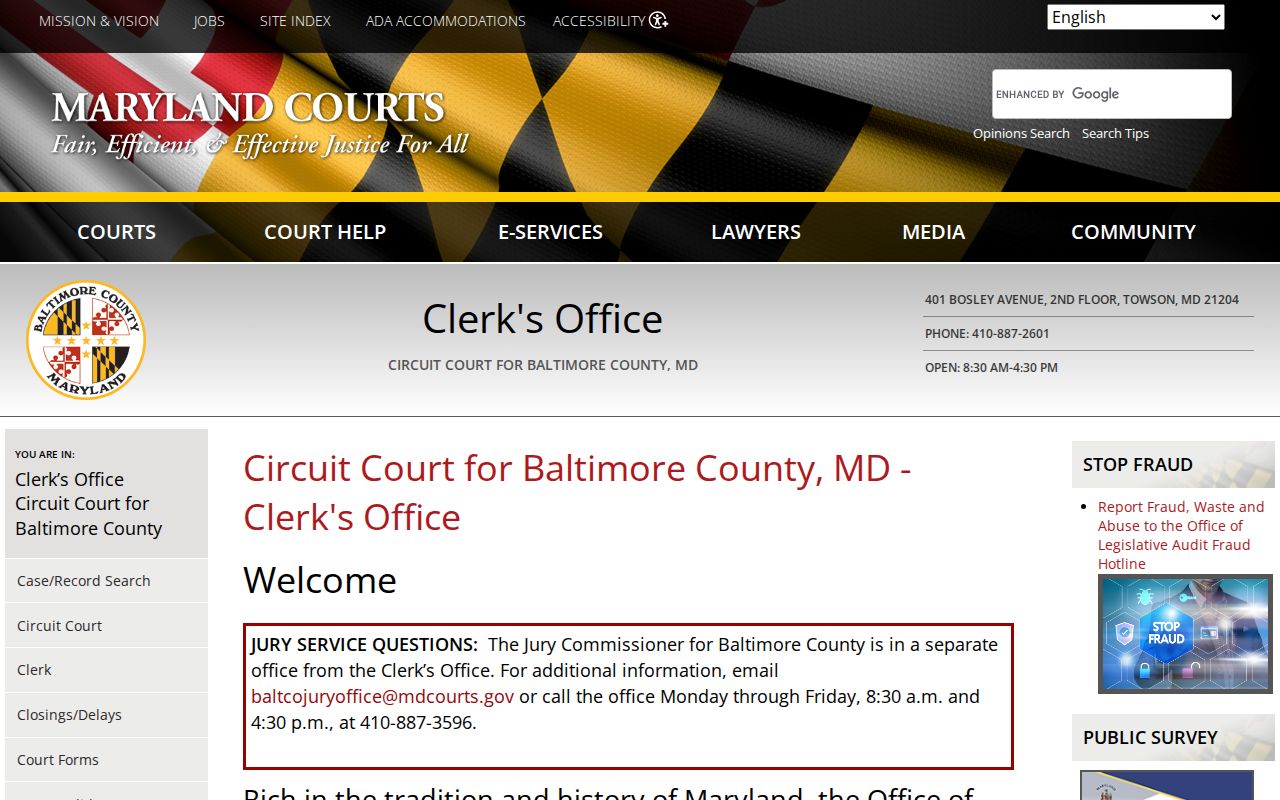
The clerk can identify the courthouse and walk you through the case process. The clerk cannot recall a warrant. In Baltimore County, that takes a judge, a filing, or a payment the court authorizes.
No Baltimore County Bench Warrant Expires
Can a bench warrant in Baltimore County expire? No. Maryland sets no expiration date on one. Time alone clears nothing, and no county amnesty program will do it either. The warrant stays active until the issuing court recalls it, the person is served, or the case is satisfied some other way. You may hear that a warrant dies after ten days. That deadline belongs to search warrants, which generally must be executed within 10 calendar days under Criminal Procedure § 1-203. A bench warrant has nothing to do with it.
Which Baltimore County Court Issued It
Start with the paperwork. The issuing court is named there. In Baltimore County, the Circuit Court handles felonies, family matters, and juvenile cases. The District Court locations at Catonsville, Towson, and Essex handle traffic, misdemeanors, certain felonies, and ordinance cases. A support warrant belongs to a Circuit Court family case. Juvenile records are confidential under Courts and Judicial Proceedings § 3-827. No public list carries them. That statute keeps juvenile files closed, so a juvenile warrant has to be worked out with the court that holds the case, not with a search portal.
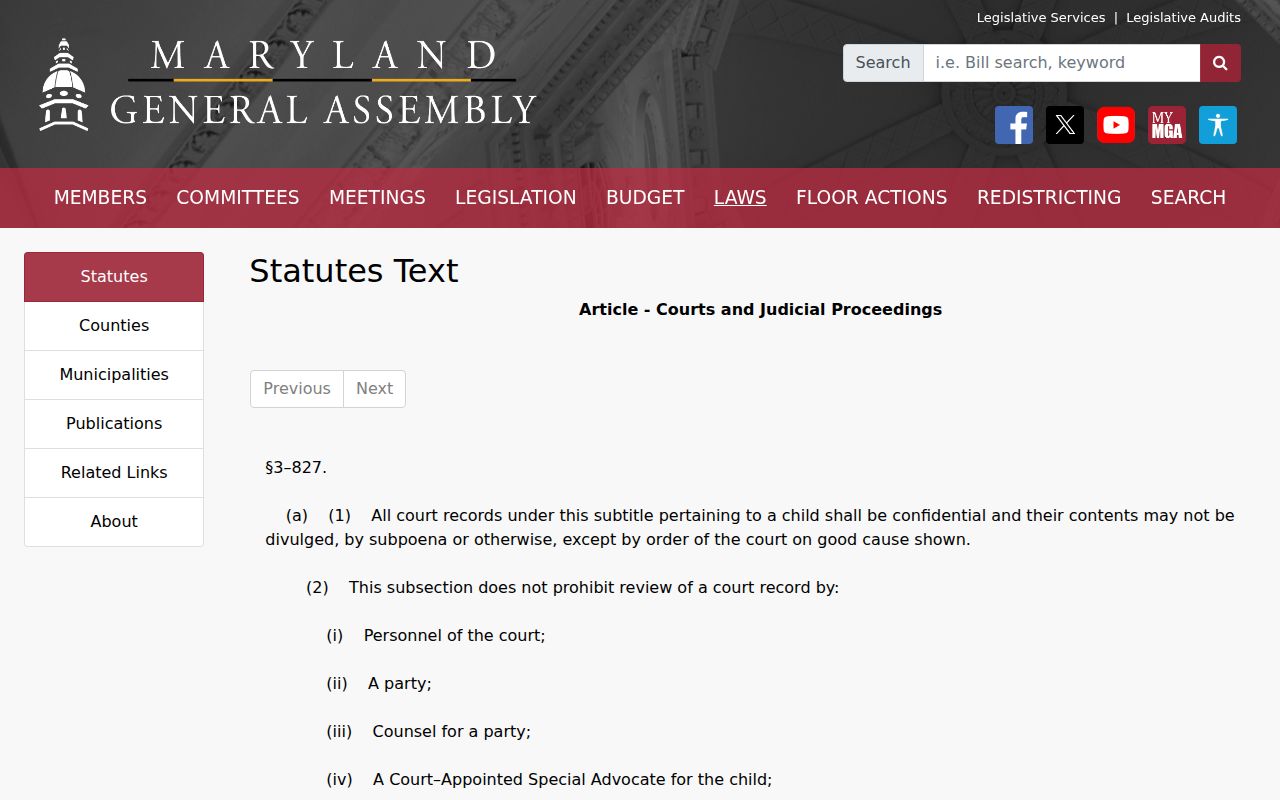
The same rule follows the warrant itself. A Baltimore County juvenile warrant never appears in a public county search, no matter how current the rest of the case file is.