
Municipal Court Warrants in Baltimore County
Here is the honest answer first. This county has no municipal courts at all. No city ordinance court exists, no city marshal, and no city jail inside Baltimore County, since none of its communities are incorporated. Every ticket and every ordinance charge lands instead in the District Court of Maryland, District 8. That does not shrink the problem any. A failure to appear still triggers a bench warrant, and county law enforcement still executes it. What changes is where a reader looks and who answers the phone.
Baltimore County Municipal Court Warrants Do Not Exist
The county's own council materials put it plainly: Baltimore County has no municipalities, just 24 census-designated places. Towson, Dundalk, Catonsville, Essex, and Woodlawn are population centers with familiar names rather than governments. None has a council, a police department of its own, or a court. That structure is unusual in Maryland, and it is easy to forget when a ticket reads Towson or Essex. The name is only a place. It is not a jurisdiction with its own warrant system.
Which Places Have Municipal Courts
None of them do. The seat belongs to the District Court, and the table below maps the county's courthouses to the work each one handles. The citation or charging document, not the place name, decides which courthouse holds a given case.
| Court | Address | Phone | Handles |
|---|---|---|---|
| District Court, Catonsville | 1 Rolling Cross Road | 410-512-2500 | Traffic, misdemeanor, ordinance, and citation cases |
| District Court, Towson | 120 E. Chesapeake Avenue | 410-512-2000 | Same District Court jurisdiction |
| District Court, Essex | 8914 Kelso Drive | 410-512-2300 | Same District Court jurisdiction |
| Circuit Court for Baltimore County | 401 Bosley Avenue | 410-887-2601 | Felony, family, and juvenile filings |
The Catonsville location is published in the Maryland District Court directory.
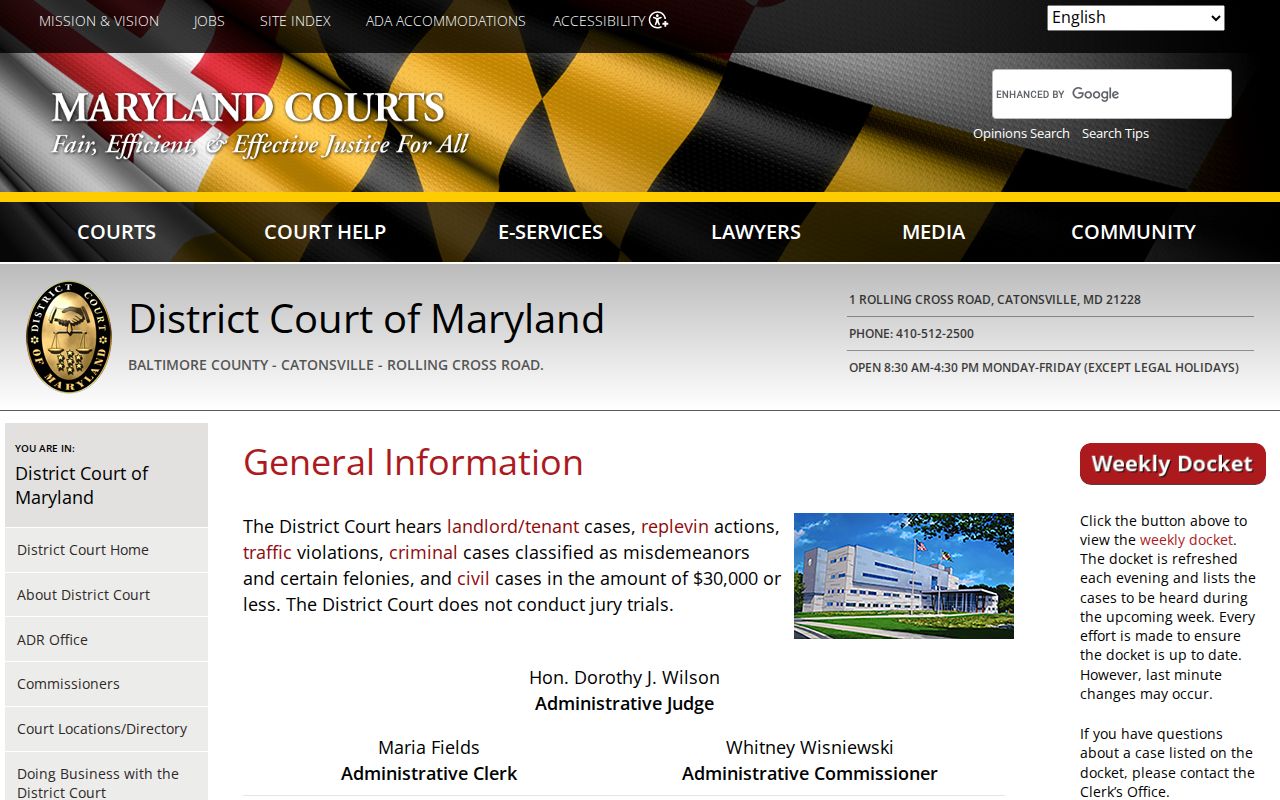
The Baltimore County page carries the address, jurisdiction, hours, and transit notes a reader needs before visiting the counter.
Where Baltimore County Ordinance Warrants Are Filed
An ordinance or citation charge filed in this county lands in District Court, where a case search works with the court system set to District Court Only. The District Court hears traffic, misdemeanors, certain felonies, and county or municipal ordinance matters within its jurisdiction. Use the citation number when there is one. Without it, a name search still works, and the caption and filing date confirm the right case. The Towson location page appears in the Maryland District Court directory, which lists the courthouse's address, hours, and contact details.
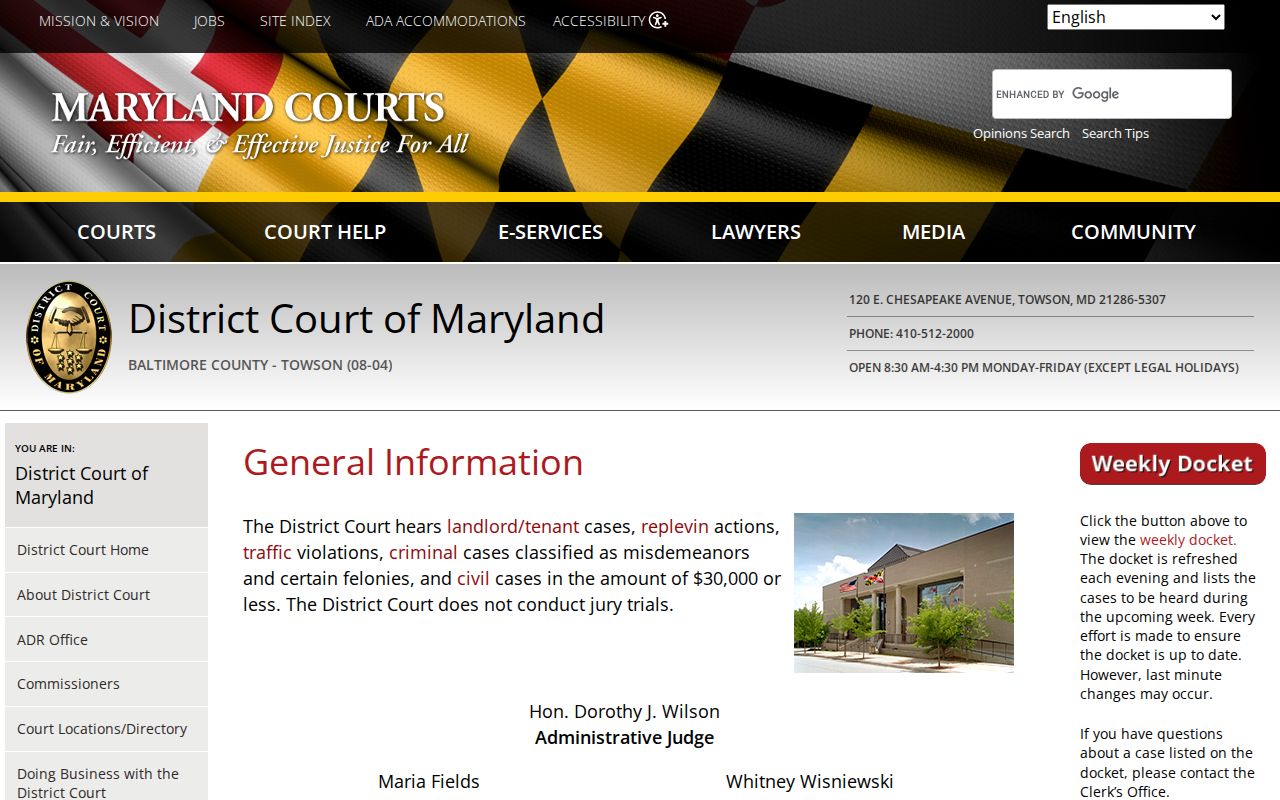
Towson also sits a short distance from the Circuit Court. A reader with a serious criminal or family case may need both Baltimore County buildings on the same trip.
How to Check a Municipal Court Warrant
A Baltimore County ordinance or citation warrant check runs through the same channels as any other District Court case. The public limits are the same too.
- Read the citation for the court location and the case or citation number.
- Search that number in Case Search, or search the name when no number exists.
- Set the court system to District Court Only, and read the case events.
- Call the District Court where the case was filed: Catonsville, Towson, or Essex.
- Ask the Sheriff at 410-887-3151 about service if the record shows a warrant.
- Request the filed document from the Clerk's Office when a copy is needed.
Why Baltimore City Warrants Stay Out of Baltimore County
Baltimore City is an independent city. It runs its own courts, its own sheriff, and its own warrant systems. A county case never belongs in a city search, and a city case never belongs in the county's. The two share a name, a border line, and little else. A reader who lives near that line should confirm the jurisdiction from the citation or the court notice before searching Baltimore County records. A search in the wrong jurisdiction returns nothing, and nothing looks exactly like a clearance.
What a Municipal Court Warrant Shows
Because the process lives in District Court, the record looks like a District Court case rather than a city docket. The Baltimore County fields below are the ones worth reading first.
| Citation or Case Number | The identifier used in every search and request, shown as 5E00000000 on citation paperwork. |
|---|---|
| Court Location | Which District Court building holds the case, and therefore which clerk to call. |
| Charge | The ordinance, traffic, or criminal charge the citation rests on. |
| Issue and Filing Dates | When the case began and when process issued. The two dates differ. |
| Case Events | The docket entries that may include a failure to appear or a warrant. |
| Service Record | Held by the Sheriff or the serving agency. Not part of the public case summary. |
No City Marshal Warrants in Baltimore County
Maryland counties have sheriffs, and the Baltimore County Sheriff serves the process assigned to it. No city marshal or town constable exists for a place like Towson or Dundalk, because there is no city government to appoint one. Field service still happens. The Sheriff, the county police, and partner agencies serve warrants in the county, and the issuing court stays the office that confirms whether a warrant is still open.
Baltimore County Warrant Records for Ordinance Cases
A filed ordinance case belongs to the court, so a request for it goes to the Clerk's Office with the case number. A request for a county agency record, such as a police report tied to the same incident, goes to the county under the Maryland Public Information Act. Neither route produces a warrant status on demand. Court records are presumed open. But warrant applications, juvenile material, sealed files, and shielded files stay out of view, and a records request cannot certify that a person is or is not wanted in Baltimore County.
Resolving a Municipal Court Warrant
Resolution works like any other District Court matter. Call the court that filed the case, ask whether the Baltimore County warrant is active, and ask what the court will accept. For a citation, that may be a payment, a payment plan, or a written request for a new date.
Caution: Paying a fine and clearing a warrant are two different acts. Ask the court to confirm the warrant's status after any payment, and keep that confirmation.
Paying without that confirmation leaves a person guessing. Guessing is how a resolved Baltimore County case turns into an unexpected stop.